

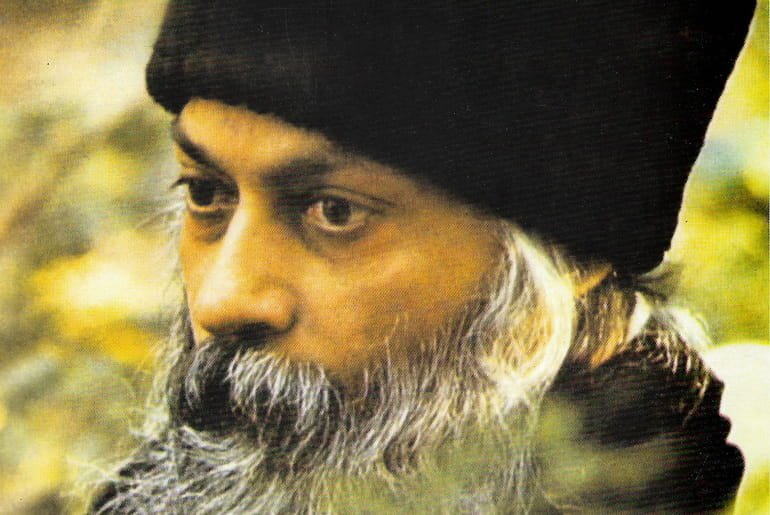
Recently, I started following and reading about Osho. And my first book was Intimacy by Osho. It took me longer than I expected to read this book because it has depth and perspective that make you question your current life and your decisions.
Here’s the book summary of Intimacy by Osho
Chapter: 1
The book begins by describing a world of stress and frustration, where everyone is constantly searching for something.
We are in such a state of mind that whenever we get whatever we want, it becomes meaningless. We think the key is money, power, prestige and respectability. But you would have seen many powerful and respectable people always searching for something, and even the ultra-rich category is always looking for something. So, the search continues, irrespective of what you have besides you.
He says that all our senses are extroverted, like eyes, hands, and ears. So, all our senses work in an extroverted way. The light of the senses falls outside, but the seeker is inside. We need to find something for the seeker inside that’s fulfilling.
Until you fulfil and seek the seeker that’s inside all your searches, your searches would be meaningless.
The book also mentions a short story about Alexander the Great: after conquering the whole world, he cries, saying that if there had been another world, he would have remained on this journey, but now, as there’s nothing else to do, he’s suddenly thrown back on himself.
So, the vital thing to know is who this seeker is, who am I? Once you shift your focus from outside to inside, all the values will change suddenly. You start moving inward.
Looking inside initially feels like moving from a sunny day into a room with no light; it would be very dark because your eyes and pupils would be adjusting. But over time, by meditating, you can readjust your vision.
With time, you’ll feel a subtle light like the moon inside you. Soon you’ll start to realise that what you’ve been chasing and searching for so long is inside you, it’s just you’ve been seeking in the wrong direction.
Osho says only you can know yourself, not anyone else, not even your love can penetrate to the centre. We believe what people say about us, and we’re so concerned about what people say about us.
Moreover, we encounter thousands of people, and each says something different about us. So, which one to choose, which one to rely on?
You get to know yourself when in deep aloneness. And it is scary to get in because you have to let go of the self you’ve created from others’ opinions. So, moving towards self-knowledge will feel like a gap; there will be a kind of nothingness. You’ll be lost because what you’ve known is no longer relevant, and you don’t know what’s relevant.
Be Relevant
Osho says, irrespective of how difficult the situation becomes, show your real face and be truthful to yourself. To be true, always remember:
- Never listen to anybody; always follow your inner voice, or your whole life will be wasted.
- You can only do the 2nd thing if you’ve done the 1st, “Never wear a mask”. If you’re angry, be angry; if you’re happy, be happy.
- Always remain in the present because all falseness enters either from the past or the future. If the past or the future burdens you, you won’t be able to enjoy or be authentic.
Always listen to yourself, your feelings, because their face isn’t their reality, like your face isn’t your reality. Everyone’s outer appearance is very different from their inner selves.
“There is no greater risk than suppression”. If you suppress, you will lose the zest for life, all enthusiasm. You will lose all life if you continue suppressing. It is toxic; it poisons the being.
Trust Yourself
“Trust is possible only if you trust in yourself”. If you don’t trust yourself, then how can you trust someone else?
But this society creates men with weak roots; otherwise, they would become dangerous to society. Because a man who trusts himself is independent, you can’t make predictions about him; he’ll move in his own way.
That’s why, in politics, they destroy a child’s trust in themself, because an afraid and shaky child can be controlled easily; on the other hand, a confident one will try to do things on his own. He will choose his own journey rather than fulfil somebody else’s desires for some trip.
Destroy his trust, then he can be good at anything, but won’t be a real individual. He will have no roots, and without them he’ll be in constant misery.
Having said that, it doesn’t mean that an uprooted, unintelligent person can’t be successful; he can, but will be phoney. They would never see the miracle that surrounds them because, to see it, you need a tremendous capacity to understand and feel it.
Trust has a magic in it. How can someone deceive you that you’ve trusted, and even if he does, he won’t be able to forgive himself. He will have to carry the weight of guilt his whole life.
A person who loves himself sooner or later starts overflowing with love. A person who trusts himself can’t distrust you even when you deceive him because he knows trust is far more valuable than anything else.
Chapter-2
Osho says, ”Love is the goal, life is the journey. And a journey without a goal is bound to be neurotic, haphazard; it will not have any direction.”
And without direction, people become neurotic; they live in fear, the reason being they’re afraid of being intimate with someone, because if someone comes close to them, they’ll be able to see the black hole in you.
He says that intimacy lies in every relationship, it is allowing the other to come into you, to see you as you see yourself. It’s an invitation to let them see the deepest core of your being, which everyone lacks because no one wants to show their ugly inner self.
We need to see and understand that the goal is love, and once it’s clear, you’ll grow an inner richness and blossom like a lotus. Knowing how to use this can take you to the highest level of existence, God.
The Need for Privacy
One has 2 sides, the outside and the within. One should be kept where it’s supposed to be; you may lose yourself completely.
The inner you should always be private; if you lose that bond, that intimacy with yourself, then you know what others tell you about yourself. Then you would depend on others’ opinions about yourself.
Osho says that when you start moving inwards, all the people you know start to fade away, and even your partner can go with you to a certain extent, then it’s only you. And after finding yourself, you would realise that you had been lost earlier.
We tend to relate to people, but if we don’t, we might feel lonely and alone, which is why we say we relate, but actually no one relates.
Osho says that one can relate when they know themselves, when they know the inner self. And one is only capable of loving when they’re capable of being utterly lonely and still be unhappy because their love is no longer a need but a sharing, no longer a necessity.
One can’t be in an authentic, real, and actual relationship if you keep safeguarding and protecting yourself, because that way, not 2 but 4 people are together. 2 false people keep on meeting, and the 2 real people remain worlds apart.
Therefore, always stay authentic. There is no guarantee that the relationship will work or even withstand the truth, but it is better than being in a false relationship.
Make it a fundamental law: risk everything for truth, but don’t do it the other way around. And ensure love happens before death; otherwise, you’ll be in vain. Love happens only with truth.
Have you ever noticed why we tend to stay true to strangers but are afraid to be so with the ones we know? With strangers, there are no strings attached, nothing is at stake, and whatever they say or you say makes no difference.
So, once you get determined, then always start with your partner because they love you and they’ll understand you, at least you should be naked in front of your partner, then eventually you can go to family and friends.
Learn the language of silence
We’ve been defaulting to the idea that the only way to communicate is through verbal language, with the world, that’s how we talk, but when it comes to an intimate relationship, it is a bit different.
Dynamics change because whenever there is some love, silence comes, and there is nothing to say. And we feel that as a heavy silence because we fail to understand that type of communication, but we need to understand that, as one becomes more mature, more non-verbal communication is needed. So, silence is okay, trying to enjoy each other’s silence.
Four Pitfalls
Osho starts by saying that “A reaction is out of the past, a response is out of the present.” When we react, we follow the same old pattern: when we felt insulted before, we react the same way in a new situation.
There’s a short Buddha story that explains that we think the people we’ve known for years are the same as they were, like parents, friends, and partners. But in reality, like a river, it never stops and is never the same; similarly, even 24 hours are a lot, and there’s a new person every moment. We die every moment, and every moment we’re born.
You’ll be shocked when you see how much the people you’ve known have changed. Stop reacting and start responding. Responding is to be responsible. To be responsive, to be responding, is to be sensitive. But be sensitive to the here and now.
Man creates his own confusion by rejecting himself and failing to accept himself, which leads to misery, confusion, and inner chaos.
The reason is that you have an ideal to achieve, which is in the future, so it hasn’t been born yet, which means it’s just a dream, which is why you condemn yourself while the whole existence accepts you the way you are.
He also talks about who thinks stem is a person. If you’re angry and don’t vent or suppress it, it’ll remain in the body and reach the brain. Now this anger will travel with you everywhere and will make everything toxic because of its anger, and then it becomes a disease.
If you suppress something, it’ll get into the roots, and the mind will say, if you can’t succeed, then you should push harder, suppress harder.
Osho says that you were in the outer world, wherein you were surrounded and stuck in society; otherwise, if you really move inside, then where’s your anger, where’s sex? Initially, when you move from outside to inside, you may bring the outer world with you, but if you continue moving inwards, society will eventually be left outside, and you will move towards the centre.
Don’t listen to your mind for the inner world; use it only for the outside world.
False Values
We humans are very smart at creating values; they look like real values but don’t require/demand your totality; they don’t demand your whole being.
He explains with examples of trust, love, and loyalty. As per him, even an enslaved person is loyal to you, but can’t be loving or trusting. Loyalty is a psychological way of enslavement because it demands you to be devoted to the person, even if your heart is not willing.
Love and loyalty look the same, but deep down they’re poles apart: love brings freedom; loyalty brings slavery.
If love is asked, it becomes loyalty, if its given without being asked then it’s your gift. The difference is very small but has tremendous importance: asked or ordered. When things arise on their own, they have immense intrinsic value. When they develop from inside, they make you a master of yourself. It is your love and trust. You’re following yourself, your heart, not somebody else’s.
Tools for Transformation
Osho says that if you accept yourself, it is the beginning of accepting all. And if you, on the other hand, reject yourself, you’re basically rejecting the universe. We’ve been conditioned this way for centuries because they’ll depend on one thing: “Improve Yourself”. And if there is a “should” in life, that’s enough to keep you in constant anxiety, because you’ll always be looking for something in the future, and by the time it’s fulfilled, you imagine other things, so it’s a never-ending loop.
Accept yourself as you are, because that’s the way god wanted you to be, and trying to improve on yourself is trying to improve upon god, which is foolish. And trying to be better will make you just madder and madder.
There’s nothing more beautiful than a human being; nobody can sing like a human, birds can, but that’s just noise because there’s no depth, no meaning. Nothing is more beautiful than human eyes, nothing is more delicate than that; you’ve so much depth.
Love starts with self-love; until you love yourself, you can’t love somebody else. It’s only possible when there’s a deep acceptance of oneself, the other and the world.
Let Yourself be Vulnerable
Life is like a river, a flow, there’s no beginning and no end. Being flowing will make you childlike, soft, delicate and uncorrupted. This is what being religious means according to Osho, but what the world means by religion is fighting with life for god. God is the goal, and life has to be denied and fought, but life is the real god.
He says some people are running behind their goals, and those who are always thinking about their past because the future gives you hope, and the past gives you nourishment, and, just between them, in the present, is the life you’re missing.
Never carry things from your past because they’re gone. Try to get away from it, be it solved or unsolved. You can’t do anything about carrying old puzzles, and parts won’t let you solve the new ones.
Live the life moment to moment as fully as possible, and you’ll soon realise the problem/puzzle is solved. Life is not a problem to be solved, it’s a mystery to be lived.
He says, ” Look at children, they’re so much into the moment that one moment they’re the angriest in the room and another moment they’re laughing”. They live so fully that there’s nothing left in that moment. One should live like children. There’s nothing wrong with being angry, but it’s wrong to drag it into another moment.
Question: People ask why we get so many thoughts when we meditate, but they usually don’t arise.
Answer: He says that those are your incomplete experiences. When you’re meditating, you’re not doing anything, so your thoughts come to you and say “resolve us”. Just a little more awareness in your being, nothing else is needed to live every moment totally.
Feel the consciousness of each person as your own consciousness. So, leaving aside concern for self, become each being. Osho says we can feel our own consciousness, but we can’t feel others’ consciousness. We live in a world where everything is inferred logically and rationally, but it’s not a felt world.
That’s why we treat others as things rather than human beings. We try to possess people, and if we behaved with others like humans, we wouldn’t try to possess, because a person without freedom is a thing. Due to this, love becomes close to impossible because love means considering the other person as a human being, a conscious person, one with freedom, as valuable as you are.
Ques: Why do I find attractive people frightening?
Ans: The more attractive a person, the more likely you’ll fall under their bondage. You would like to resonate with them, relate to them and while relating with someone else, you’ll lose yourself, you’ll become dependent.
Well, no one wants to be dependent as freedom is the real thing, the ultimate value. Freedom is even higher than love. And those who love freedom become afraid of love.
Osho says that it’s easy to escape from an ugly person because that person can’t possess you. Well, that person will be a better partner because they know that beauty lacks, so to compensate, they’ll do everything. Beautiful people can afford to fight, but ugly can’t.
Well, when you talk about real love, it never exploits you or possesses you; rather, it blossoms and makes everything better. The problem arises only when you want to possess others. If you don’t want to possess others, then the fear of being possessed never arises either.
Last Line
It’s not just a normal summary. I’ve tried to write a summary that covers every chapter and part of the book.
In any video or book, Osho always brings a perspective that’s totally different from the rest of the world. I hope you enjoyed reading summary of Intimacy by Osho.